Tarot card meanings / Swords / Four of Swords
Minor Arcana · Swords
Four of Swords Tarot Card Meaning
Rest after strain. The Four of Swords is a deliberate pause, the mind laying its weapons down to recover, and permission to stop before you have to.
Upright
- rest
- recovery
- retreat
- a pause
- quiet
- restoring your strength
Reversed
- restlessness
- burnout
- rest refused
- stagnation
- returning too soon
See the astrology & tradition
Jupiter is the planet of generosity and room to grow; Libra is the sign of balance. Read together: the mind given enough space to settle before it’s asked for anything else.
The deeper meaning
Fours are where a suit finds its footing. After the first spark, the choice and the moment something became real, the Four builds a floor to stand on. In Swords that floor is quiet. The Three brought the wound. The Four is what the wound needs next: rest.
In real life this looks less like a spa weekend and more like the evening you finally turn your phone face down. The sick day you actually take. The weekend you don’t fill. The month after a breakup, a loss or a long push at work when you do less than you think you should, because doing less is the only thing that helps.
Rest isn’t the reward for recovering. It’s how recovery happens.
The swords here aren’t gone. They’re put away, within reach, for later. That’s the difference between rest and giving up. You’re not abandoning the problem. You’re stepping out of the fight long enough to become someone who can face it well.
Handled well, the Four of Swords is sleep that repairs, solitude that settles the mind, a truce you keep on purpose. Handled poorly, it tips into hiding: rest that has become avoidance, or rest you take while telling yourself the whole time that you should be doing more. The card asks for the real thing. Lie down, and let yourself be lying down.
When this card appears
- Restbefore you’re forced to. The body keeps a quieter calendar than you do.
- Protecta few hours with no input at all: no news, no messages, no advice.
- Postponedecisions that don’t need making this week.
- Releasethe guilt about not being productive right now.
- Ask forthe cover you need, so the pause can actually happen.
Feya After Dark
In the Feya card
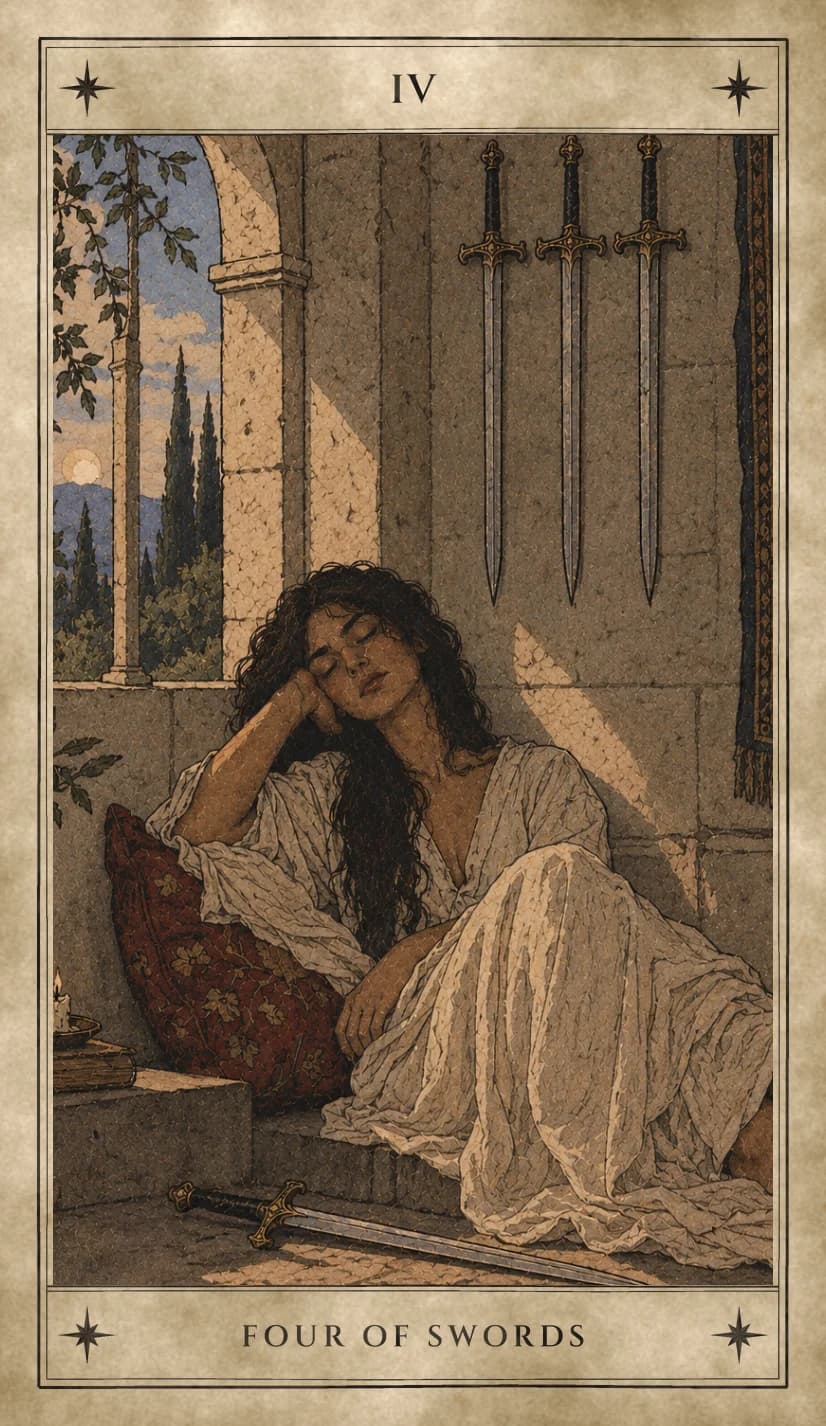
Our Four of Swords is not a stone figure lying on a tomb. It’s a living woman, dozing in the afternoon. She leans into a red cushion with her head resting on her hand, her dark hair loose, her eyes closed. She isn’t dead or defeated. She’s simply off duty.
Three swords hang on the wall above her, points down, put away. The problems are still in the room. They just aren’t in her hands.
The fourth sword lies on the floor beneath her, set down within reach. Rest doesn’t mean giving up your defences forever. It means you can pick them up later.
The candle on a book beside her is a small, steady light. Some thinking goes on during rest, but slowly, and without being forced.
The arched window opens onto cypresses, hills, a climbing vine and a low sun. The world outside hasn’t gone anywhere. Sunlight falls across the wall, and a woven hanging softens the stone.
Everything in this card is warm. That’s deliberate. Recovery isn’t a punishment you sit through. It can be kind.
Love & relationships
In love the Four of Swords usually asks for space: time to recover after conflict, a quieter season in a relationship, or a pause before starting something new.
If you're single
You may not be ready to date again, and that’s allowed. Recovering from the last relationship before starting the next is not wasted time. When you’re rested, you choose better.
If you're together
After a hard patch, you both need a truce more than another talk. Stop reopening the argument for a while. Sleep, eat, do something ordinary together. Come back to the conversation when neither of you is exhausted.
If you're apart
Space is doing its work. This isn’t the card of rushing back or of a dramatic ending. It’s the quiet stretch where the sharpest feelings begin to settle, whatever you decide later.
Career & work
Burnout, a sabbatical, a break between jobs, or simply a week that needs to be lighter. If you can take the leave, take it. If you can’t, find the smaller versions: a real lunch break, an evening without email, one meeting declined. Ideas often arrive after rest that never came during the grind.
Money
A pause, not a plan. Hold off on big financial moves while you’re tired or recovering. Keep things simple and steady for now. If money worries are part of what’s exhausting you, writing down where things stand can let your mind rest from circling it.
You don’t have to earn your rest by breaking first.
Inner life
Many people only stop when their body stops them. The Four of Swords is an invitation to stop sooner. Inwardly, it’s a card of quiet: letting your thoughts slow until you can hear what’s underneath them. Some healing happens only when you stop trying to heal. You don’t need to work on yourself today. You need to be looked after, including by you.
Reversed
Reversed, the rest isn’t happening, or it’s gone on too long. It can mean:
- Running on empty. You know you need to stop and you keep going anyway. The body tends to settle that argument eventually.
- Restless rest. You’re lying down but your mind is still in the fight. Time off that isn’t really off.
- Back too soon. Picking up the swords before you’ve recovered, and feeling the strain return quickly.
- Retreat that became hiding. The pause has turned into avoidance. It may be time to rejoin the world slowly.
Which one depends on the cards around it. Next to the Ten of Wands, it leans toward burnout. Next to the Four of Cups or the Hermit, toward withdrawal that has gone on long enough.
Questions to ask yourself
- What would real rest look like for me this week?
- What am I recovering from that I haven’t named?
- Which of my problems can wait on the wall for a while?
- Where do I feel guilty for resting, and whose voice is that?
- What does my body keep asking me for?
Related cards
 Three of SwordsThe wound this rest is for.
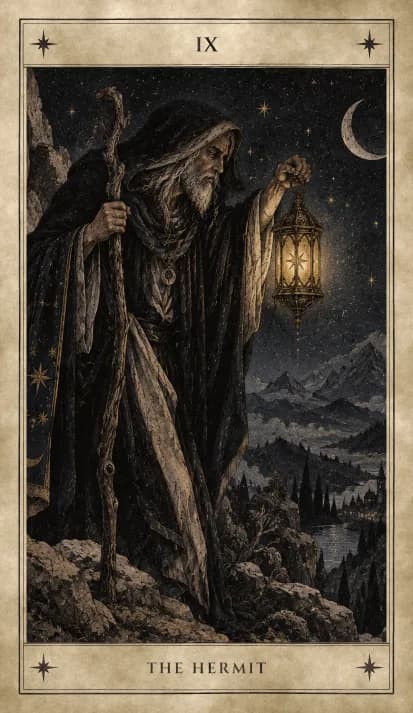 The HermitWithdrawal chosen for wisdom, over a longer season.
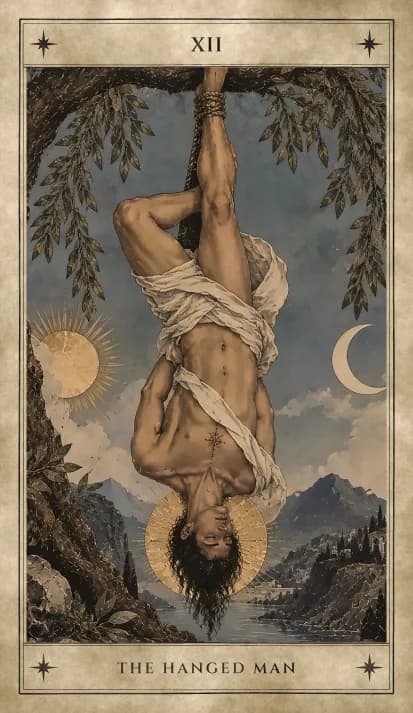 The Hanged ManA pause that changes how you see things.
 Four of CupsWhen retreat turns into refusing what’s offered.
 Six of SwordsWhen rest becomes readiness to move on.
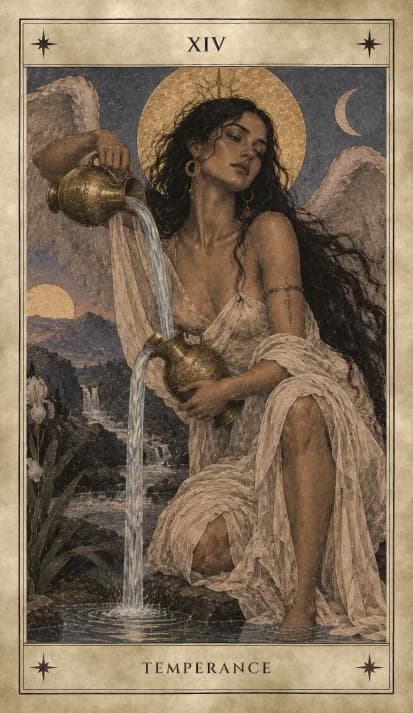 TemperanceBalance slowly restored after strain.
Short answers
Is the Four of Swords a yes or no?
It leans no, or more precisely “not yet”. It suggests pausing before acting. That’s different from a refusal: the answer may look very different once you’re rested.
What does the Four of Swords mean in love?
Space and recovery. It can point to a quiet period after conflict, a break, or a need to heal before starting something new. It rarely means the end on its own. It means not now, and not while you’re this tired.
What does it mean as feelings, or how someone sees me?
They need space. They may be withdrawn, tired or processing something, and not ready to talk yet. It doesn’t mean they don’t care. It often means they can’t give much right now.
Does the Four of Swords mean illness?
Some traditions link it to recovery, convalescence or a hospital stay, because of its imagery of rest. A card is not a diagnosis. If you’re worried about your health, talk to a doctor. As a reading, it simply asks you to take rest seriously.
Is the Four of Swords a Libra card?
In the Golden Dawn system it rules the third decan of Libra, Jupiter in Libra, roughly October 13 to 22. Its old title is “Lord of Rest from Strife”. Some readers use decans for timing. We offer it as tradition, not prediction.