Tarot card meanings / Major Arcana / Death
Major Arcana
Death Tarot Card Meaning
An ending that makes room. Death rarely means physical death. It marks something reaching the end of its life, and asks you to let it go.
Upright
- ending
- transformation
- letting go
- a chapter closing
- clearing space
- renewal
Reversed
- resisting an ending
- holding on
- slow change
- fear of letting go
- an ending half-made
See the astrology & tradition
Scorpio is the sign of depth, endings and renewal. Read with Death: change that goes all the way down, the kind you come out of different.
The deeper meaning
Death is card XIII, and it follows the Hanged Man. The Hanged Man surrendered and saw things differently. Death is what that surrender makes possible: a real ending. It comes near the end of the second row of the majors, and after it comes Temperance, the slow work of blending what remains into something new.
In real life the Death card looks like the last day at a job. Moving out. The relationship that’s been over for months finally ending in words. The identity you’ve outgrown: the person you were at twenty-five, the role you played in your family. It can be a relief. It can be grief. Often it’s both at once.
Death doesn’t take what’s alive. It takes what has already stopped living and asks you to stop carrying it.
The card frightens people, and it’s worth saying plainly: it almost never predicts a literal death. Tarot tradition reads it as transformation. Something has run its natural course. Continuing to hold it in place, out of habit, fear or loyalty to who you used to be, costs more than letting it go.
Handled well, Death is a clean ending with room for grief and room after it. Handled poorly, it becomes a long refusal: keeping something on life support because the ending is frightening, or rushing past the loss without feeling it. The card doesn’t ask you to be glad. It asks you to be honest that this is over.
When this card appears
- Admitthat something has ended, even if nobody has said so yet.
- Releasewhat you’ve been holding out of habit rather than love.
- Grievethe ending properly. Relief and sadness can both be true.
- Clearspace: the room, the calendar, the role that no longer fits.
- Trustthat the empty ground won’t stay empty.
Feya After Dark
In the Feya card
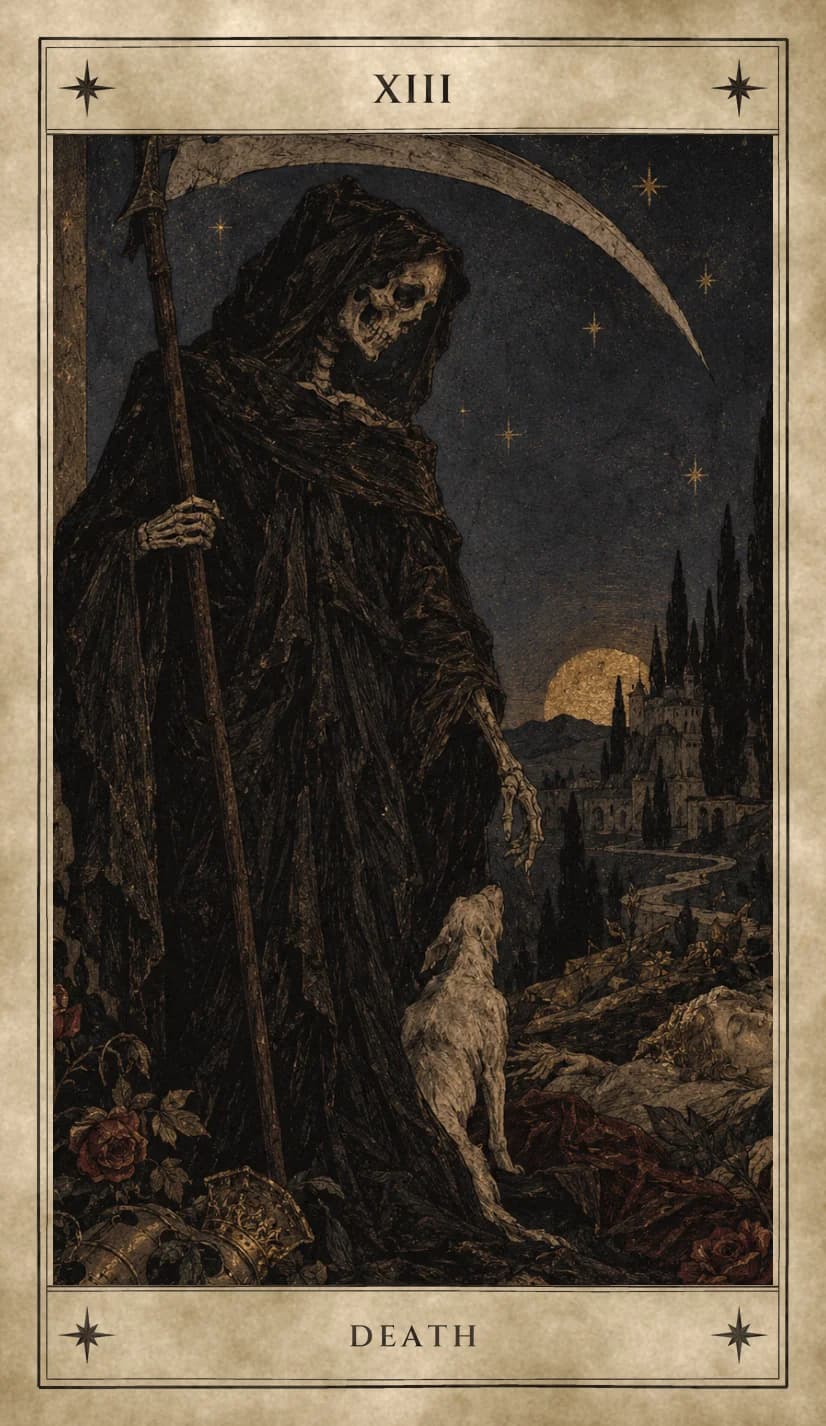
Our Death doesn’t ride in on a horse. It stands, tall and still, in a ragged hooded cloak, holding a scythe whose blade curves across the whole night sky. Its head is bowed. One bony hand reaches down, not to strike, but toward a pale dog that looks up at it, unafraid.
The dog is the tenderest thing in the card. In many old traditions dogs guide and keep company with the dying. This one isn’t fleeing. It looks up at the skeleton the way you’d look at someone you know. Endings, here, are met rather than run from.
The scythe is a harvesting tool. It cuts what is ripe, what has finished growing. The card’s ending is a harvest as much as a loss.
The figure lying on the red cloth has closed eyes and a peaceful face, a wreath in their hair. Nearby, a fallen crown lies on its side among red roses. Rank, power, beauty: Death treats them all alike.
The low gold sun sits on the horizon beside a castle and a winding road. You can’t tell whether it’s setting or rising, and the card leaves that open on purpose. From inside an ending, the two look the same.
Love & relationships
In love the Death card marks the end of something: sometimes a relationship, often a stage of one, or an old pattern in how you love. It doesn’t decide your future for you. It asks what has already ended, and what needs to.
If you’re single
Let the last relationship be finished. Not only the person, but the version of you who was in it. There is room for something new once that ground is clear.
If you’re together
A chapter is closing. That can be the end of the relationship, or the end of the way it has been: the honeymoon, the old roles, a pattern you both know isn’t working. Many couples go through several Death cards and come out closer.
If you’re apart
This card rarely points back. It tends to confirm that something is over and ask you to grieve it honestly, rather than keep a door propped open that no one is coming through.
Career & work
A job ending, a role changing, a business closing, a whole direction you’ve outgrown. It can be chosen or not. Death favors clearing out what isn’t working rather than patching it again. Let the old title go before you fully know the new one. There’s usually a gap, and that’s normal.
Money
The end of a financial chapter: an income stream closing, a debt finally cleared, an old way of spending that has to stop. Close accounts and commitments that no longer serve you. Don’t make large decisions in the first raw days after a loss.
What ends in you was once alive. That is why it hurts, and why it matters.
Inner life
Death’s inner work is letting parts of yourself finish. Old beliefs, old defences, old stories about who you have to be. They helped once. The card asks you to thank them, and to stop feeding them, so that whoever you are becoming has space to grow.
Reversed
Reversed, Death usually means the ending is happening differently than it needs to. It can mean:
- Holding on. Keeping something going that has clearly finished, because the ending feels worse than the staying.
- A slow ending. Change is happening, but gradually, one small letting go at a time.
- Fear of change. The door is open. You can see it. You just can’t walk through yet.
- An ending half-made. It’s over on paper, but not in your heart, or the other way round.
Next to the Four of Pentacles, reversed Death leans toward holding on too tightly. Next to the Six of Swords, toward finally moving on.
Questions to ask yourself
- What in my life has already ended that I haven’t admitted?
- What am I keeping alive out of habit rather than love?
- What would I grieve if I let this go?
- Which version of me is ready to finish?
- What might grow in the space this leaves?
Related cards
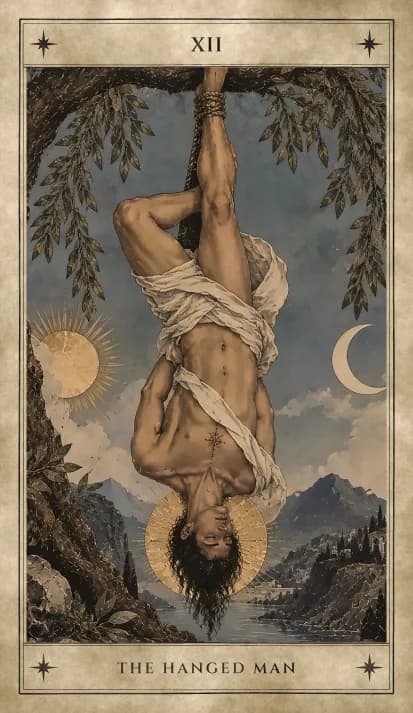 The Hanged ManThe surrender that makes a real ending possible.
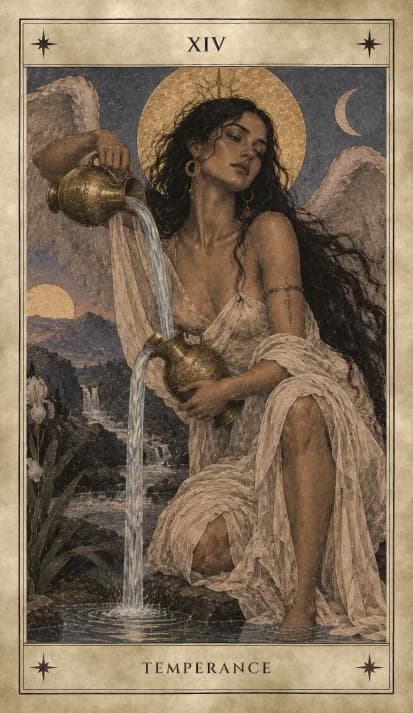 TemperanceWhat comes after: slowly blending what’s left into something new.
 The TowerWhen the ending isn’t gradual but sudden.
 Ten of SwordsA painful ending that is also, finally, the end.
 Eight of CupsWalking away from what no longer feeds you.
 JudgementRising again, changed, after the ending.
Short answers
Is the Death card a yes or no?
It leans no, especially to things continuing as they are. It often answers “this chapter is ending”. If the question is about starting fresh, it can support that, once the old thing is let go.
Does the Death card mean someone will die?
Almost never. In tarot tradition Death means endings and transformation, not physical death. A card cannot predict anyone’s health or lifespan. If you’re worried about someone’s health, talk to them or to a doctor, not a deck.
What does the Death card mean in love?
An ending, or a deep change. It can mean a relationship closing, or the end of an old stage or pattern within one. Many relationships survive a Death card by becoming something new.
What does it mean as feelings, or how someone sees me?
They may feel something has changed for good, or be moving on. It can also describe feelings being transformed, not always ending, but no longer what they were.
Is the Death card bad?
It’s a serious card and can mark real loss. But it’s rarely a bad omen. It clears what’s finished so something else can grow, and many readers see it as one of the most hopeful cards in the deck.
Is the Death card a Scorpio card?
In the Golden Dawn system Death belongs to Scorpio, the fixed water sign of depth and renewal. We offer it as tradition, not prediction.