Tarot card meanings / Major Arcana / Justice
Major Arcana
Justice Tarot Card Meaning
Truth and consequence. Justice asks you to look at what happened without editing the evidence, own your share, and choose fairly from there.
Upright
- truth
- fairness
- accountability
- cause and effect
- a clear decision
- balance restored
Reversed
- self-deception
- unfairness
- avoiding responsibility
- blame
- a decision delayed
See the astrology & tradition
Libra is the sign of the scales: fairness, relationship, weighing one thing against another. Read with Justice, it’s the clear head that looks at both sides before deciding.
The deeper meaning
Justice is card XI, the first card after the Wheel of Fortune turns. The Wheel was change you didn’t fully control. Justice is where you look at that change honestly: what caused it, what part was yours, what’s fair now. It sits near the center of the Major Arcana like a set of scales, weighing the first half of the journey against what comes next.
In real life Justice often feels like a reckoning, but a clear one. The conversation where you finally say what happened, in order, without softening it. The contract, the decision, the apology. The moment you stop telling yourself a flattering version of the story and look at the real one.
Justice doesn’t ask whether you’re good. It asks whether you’re honest.
This is a card of cause and effect, and that can sound frightening. It doesn’t have to be. Consequences aren’t punishment. They’re information. What you did, and what others did, has led here. Seeing that clearly is what makes a better choice possible next time.
Handled well, Justice is fairness that includes yourself: not letting yourself off the hook, and not piling on more blame than is yours. Handled poorly, it becomes judgement without mercy, or a hunt for someone else to blame. The sword in the card cuts both ways. It’s there to separate true from false, not to wound.
When this card appears
- Admityour part, no more and no less than it actually was.
- Weighboth sides before you decide, even the side you don’t like.
- Tellthe story plainly, in order, without the edits.
- Finishthe paperwork, the agreement, the decision you’ve been putting off.
- Ask forwhat’s fair, calmly and specifically.
Feya After Dark
In the Feya card
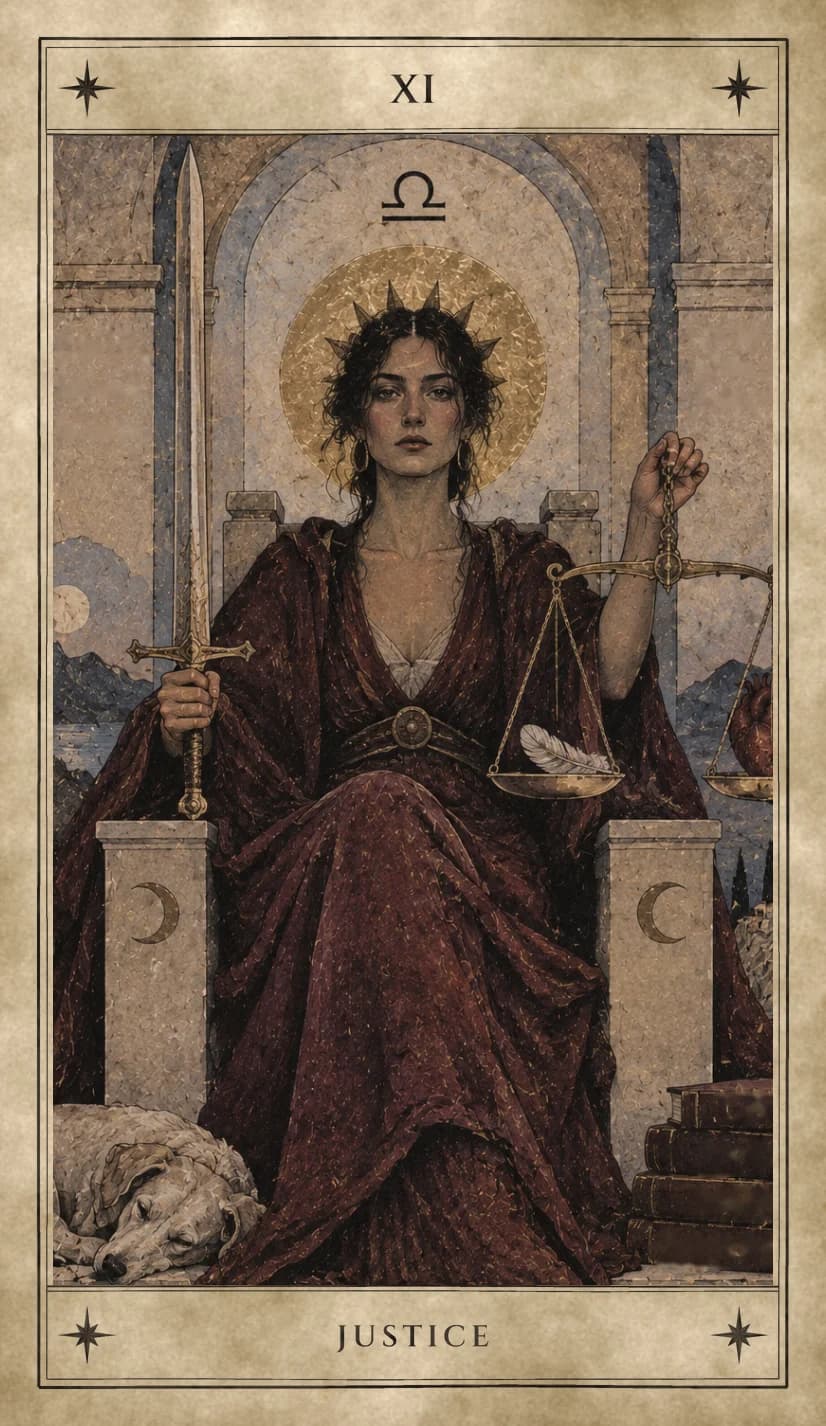
Our Justice looks straight at you. Many cards look away, or down, or inward. She doesn’t. She sits upright on a stone throne with a sword in one hand and scales in the other, and her gaze says she has seen what happened and isn’t going to pretend otherwise.
The feather and the heart on the scales are an old image, older than tarot. In ancient Egyptian belief, the heart of the dead was weighed against the feather of Ma’at, goddess of truth and order. It asks whether your heart is light enough, free enough of what you’ve hidden, to balance with the truth. The pans hang close to level.
The upright sword is double-edged. It stands for clear thinking and a decision made. It cuts through confusion, and it cuts both ways.
The sleeping dog at her feet is loyalty at rest. Fairness here isn’t anxious or suspicious. When things are weighed honestly, what’s faithful can sleep.
The stacked books on the other side are precedent, memory, the record: what has been learned before. Justice doesn’t decide from nowhere.
The Libra glyph and the crescent moons sit above her and on the arms of her throne. Behind her, a round light hangs over the water and the mountains. It’s a calm card, not an angry one.
Love & relationships
In love Justice is about fairness and honesty: seeing the relationship as it really is, with each person’s part acknowledged. It favors clear agreements and conversations where both people tell the truth.
If you’re single
Look honestly at your past relationships, including your own patterns. Not to judge yourself, but to choose differently. Justice also favors someone who treats you as an equal.
If you’re together
Balance matters now. Who gives, who takes, who apologizes, who decides. The card asks for an honest look and a fair conversation, not a scorecard used as a weapon.
If you’re apart
Endings have consequences, and Justice asks you to face them clearly: what was yours, what wasn’t. Where there are practical matters to settle, it favors fair, clear arrangements over drawn-out battles.
Career & work
Contracts, reviews, negotiations, formal decisions. Justice favors clear records and honest dealing. If you’ve done good work, it tends to be seen. If there’s been unfairness, this card supports raising it calmly and specifically. Where anything legal or formal is at stake, get proper advice. A card isn’t a lawyer.
Money
Balance the books. Justice asks for an honest look at what comes in, what goes out, and what’s owed. Settle debts where you can, read agreements before signing, and split shared costs fairly. It favors clarity over hope.
The truth doesn’t get lighter when you avoid it. You just carry it longer.
Inner life
Justice’s inner work is being fair to yourself. That means owning what’s yours without taking on what isn’t. Many people are either too easy on themselves or far too harsh. This card asks for the harder middle: honest, and kind enough to keep going.
Reversed
Reversed, Justice usually means the scales are off somewhere. It can mean:
- Self-deception. A version of events you prefer to the real one.
- Unfairness. Something genuinely isn’t fair, and it’s reasonable to name it.
- Blame. Too much on someone else, or too much on yourself.
- Delay. A decision, verdict or agreement that keeps getting pushed back.
Next to the Seven of Swords, reversed Justice leans toward dishonesty, yours or someone else’s. Next to Judgement, toward finally coming to terms with the past.
Questions to ask yourself
- What would I see if I stopped editing the story?
- What part of this is honestly mine?
- What part am I carrying that belongs to someone else?
- What would a fair outcome look like, for everyone involved?
- What decision have I been avoiding because it would be final?
Related cards
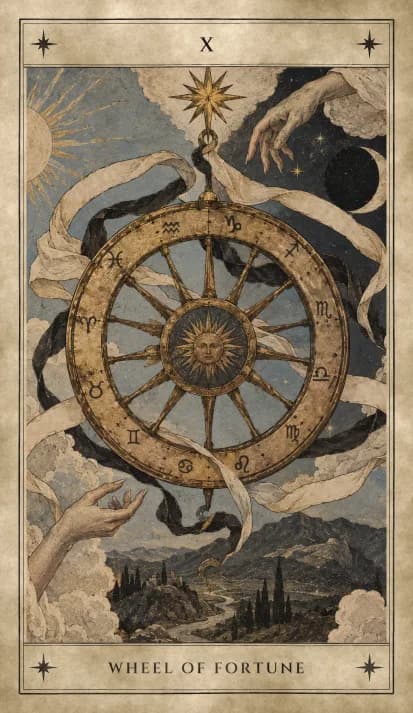 Wheel of FortuneThe change whose causes Justice now looks at.
 JudgementA deeper reckoning, and the chance to rise from it.
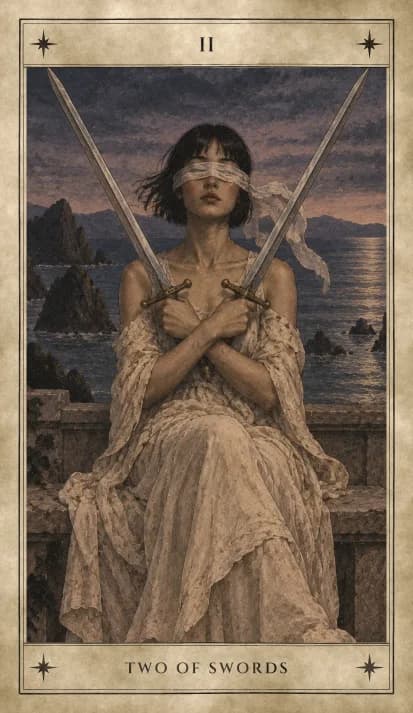 Two of SwordsThe decision that stays blindfolded instead of weighed.
 Seven of SwordsGetting away with it, the opposite of accountability.
 King of SwordsClear, fair judgement in a single person.
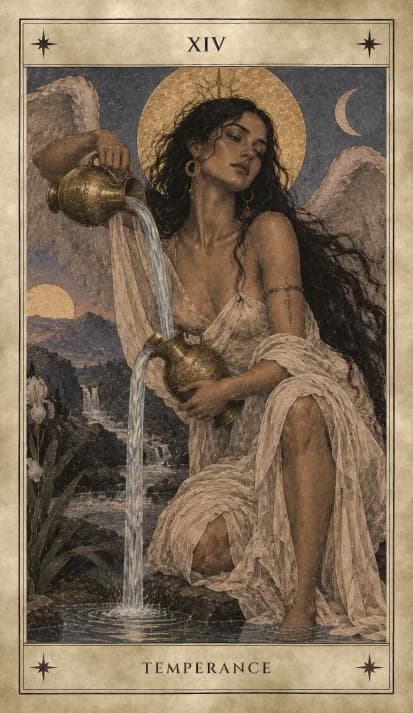 TemperanceBalance found through patience rather than verdict.
Short answers
Is Justice a yes or no?
It depends. Justice gives the fair answer, not necessarily the hoped-for one. If you’ve acted honestly and the question is about what you deserve, it can lean yes. If something has been hidden, it leans toward consequences.
What does Justice mean in love?
Honesty and balance. Seeing the relationship as it is, owning your part, and asking for fairness. It can also mark a clear decision about a relationship, made with open eyes.
What does it mean as feelings, or how someone sees me?
They may be weighing things up, trying to be fair about their feelings or the situation. They may see you as honest and principled, or feel that something between you needs to be set right.
Does Justice mean I’ll win a legal case?
No card can tell you that. Justice is traditionally linked with legal matters and fair outcomes, but a reading is reflection, not advice. For anything legal, speak to a qualified professional and keep good records.
Is Justice a Libra card?
Yes, in the Golden Dawn system Justice belongs to Libra, the sign of the scales. Older decks number it VIII rather than XI. We offer the correspondence as tradition, not prediction.